
When a small closet feels overcrowded, it's easy to assume the only solution is more storage. But sometimes the real problem isn't the size of the closet—it's how the available space is being used.
Empty vertical areas, overcrowded shelves, poorly placed organizers, and clothes you rarely wear can quietly consume valuable storage space.
The good news is that you don't necessarily need to rebuild your closet or buy an entirely new organization system. Correcting a few common mistakes can make a small closet noticeably easier to use.
Here are 10 small closet organization mistakes worth fixing.
Top Picks (Quick Links)
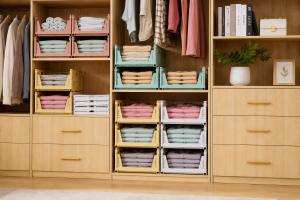
Stackable Storage Baskets
Best for: Using empty vertical space
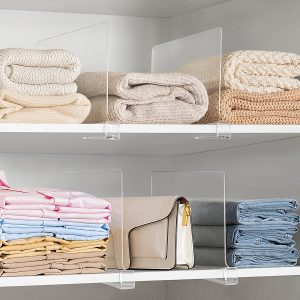
Closet Shelf Dividers
Best for: Keeping folded clothes separated
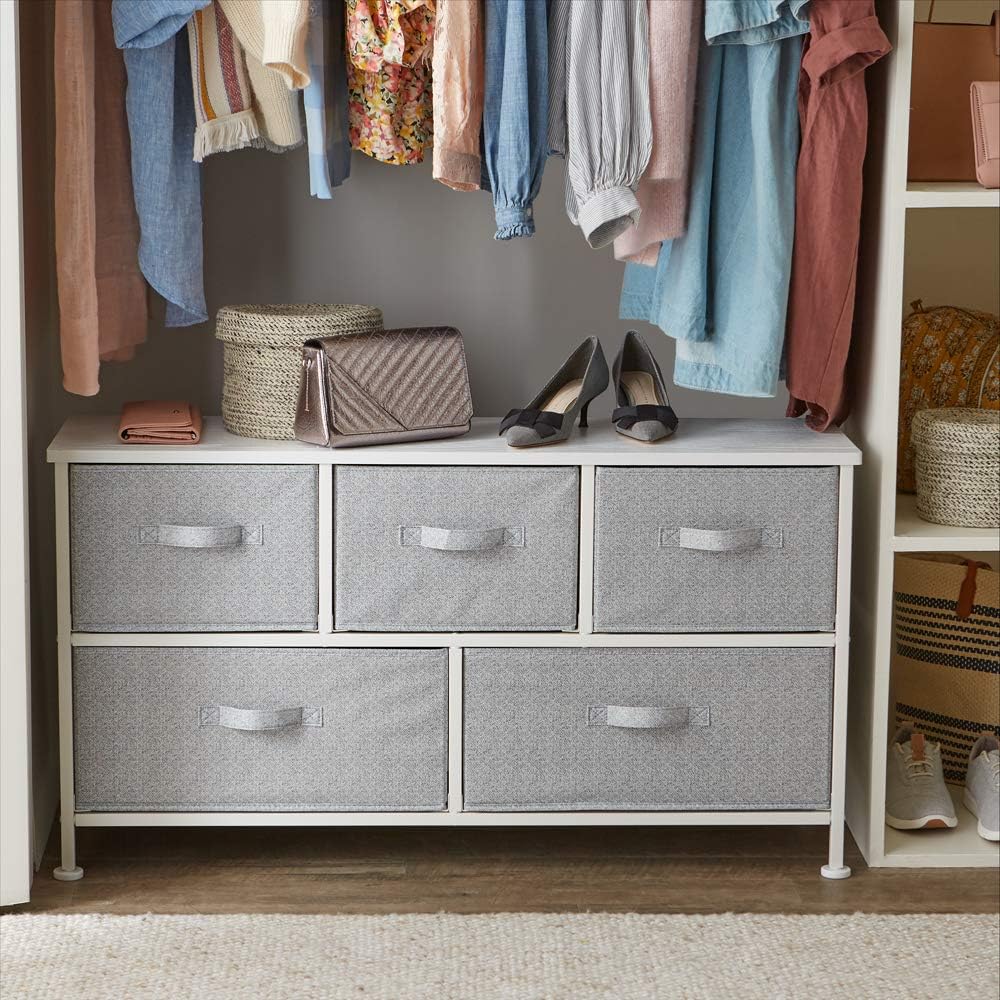
5-Drawer Closet Organizer
Best for: Adding compact drawer storage
For a complete organization plan, start with our Small Closet Organization Ideas That Actually Work guide. If your main goal is simply creating additional usable space, also see How to Make More Room in a Small Closet: 10 Easy Ways.
1. Buying Organizers Before Decluttering
This is one of the easiest mistakes to make.
A messy closet makes you want to immediately buy:
- Baskets
- Bins
- Shelves
- Hangers
- Drawers
But buying storage for belongings you don't actually need can make the problem worse.
Do this instead
Declutter first.
Separate everything into:
Keep → Donate → Store elsewhere
Once you know what's staying, you'll have a much better idea of which organizers you actually need.
2. Ignoring Vertical Space
Look above your clothing rod.
Then look below your hanging clothes.
Small closets often contain more unused vertical space than people realize.
Instead of adding storage horizontally, consider how you can build upward.
Stackable Storage Baskets can turn unused height into several organized storage areas without requiring additional floor space.
View Stackable Storage Baskets on Amazon →
3. Overfilling the Hanging Rod
More hangers aren't always the answer.
When clothing is packed tightly together, finding individual pieces becomes frustrating and returning clothes to the closet becomes harder.
That's usually when organization starts breaking down.
Move seasonal and rarely worn clothing elsewhere so the hanging section primarily contains items you actually use.
4. Letting Folded Clothes Become One Giant Pile
You know how this goes.
You neatly fold everything.
A week later you need the shirt at the bottom.
And suddenly the entire stack collapses.
Closet Shelf Dividers can create separate sections for:
- T-shirts
- Sweaters
- Jeans
- Shorts
- Workout clothing
Instead of one large pile, each clothing category gets its own space.
View Closet Shelf Dividers on Amazon →
5. Wasting the Space Under Hanging Clothes
This can be some of the most valuable space in a small closet.
Shorter garments such as shirts can leave a large empty area underneath them.
Depending on the closet, that space may accommodate:
- Drawers
- Shoes
- Baskets
- Folded clothing
- Accessories
A compact 5-Drawer Closet Organizer can be especially useful here.
It essentially creates dresser-style storage inside the closet without requiring another piece of full-size bedroom furniture.
View 5-Drawer Closet Organizer on Amazon →
If you don't have a traditional dresser, see our How to Organize Clothes Without a Dresser guide.
6. Keeping Every Season in the Same Closet
Winter coats don't need your best closet space during summer.
And summer clothing doesn't need to dominate your closet during winter.
Seasonal rotation can dramatically reduce the number of garments competing for everyday storage.
Before putting clothes away for several months, our Best Long-Term Clothing Storage Solutions to Protect Your Wardrobe guide explains how to prepare them properly.
7. Using Containers That Are Too Large
Bigger isn't automatically better.
One enormous storage bin filled with unrelated items can become another form of clutter.
Smaller categories are often easier to maintain.
Instead of:
MISCELLANEOUS CLOTHES
try:
WINTER ACCESSORIES
GYM CLOTHES
SWIMWEAR
BAGS
You'll know exactly where everything belongs.
8. Forgetting About the Closet Door
If your closet allows for it, the inside of the door can provide additional storage without taking away shelf or floor space.
Depending on your needs, door storage can work for:
- Shoes
- Scarves
- Small accessories
- Belts
- Lightweight items
Just avoid loading the door with so much storage that the closet becomes difficult to open or use.
9. Making Frequently Used Items Hard to Reach
Your closet should reflect how you actually live.
If something gets used every week, don't put it on the highest shelf behind three storage bins.
A simple hierarchy works well:
Eye level: everyday items
Lower areas: shoes and frequently accessed storage
Upper areas: seasonal and rarely used items
The easiest parts of your closet should be reserved for the things you use most often.
10. Filling Every Available Inch
This may be the most counterintuitive mistake.
An organized closet doesn't need to be 100% full.
In fact, leaving some unused space makes it easier to:
- See what you own
- Remove clothing
- Put things away
- Maintain organization
- Add something new
The goal isn't to see how much stuff you can physically fit inside the closet.
The goal is to make the closet easy to use.
What Is the Best Way to Organize a Small Closet?
Start with what you own rather than what organizers you can buy.
Declutter unnecessary clothing, separate frequently used items from seasonal pieces, and then identify unused areas of the closet.
Pay particular attention to:
- Vertical space
- Upper shelves
- Space beneath hanging clothes
- The closet door
- Empty corners
Only after you've identified those opportunities should you decide which storage products will actually improve the space.
For a step-by-step approach, continue with our Small Closet Organization Ideas That Actually Work guide.
Frequently Asked Questions
What is the biggest mistake when organizing a small closet?
Trying to organize too many belongings without decluttering first is one of the biggest mistakes. Removing unnecessary items makes every other organization strategy easier.
How do I maximize space in a very small closet?
Use vertical space, upper shelves, areas beneath shorter hanging garments, closet doors, stackable storage, and compact drawers.
Should I put a dresser inside a small closet?
A full-size dresser may consume too much space, but a narrow drawer organizer can provide similar functionality while maintaining more usable closet space.
Is it better to hang or fold clothes in a small closet?
Use both. Hang garments that benefit from hanging and fold items such as sweaters and many casual clothes to avoid overcrowding the clothing rod.
How do I stop my small closet from becoming messy again?
Give every category a designated location and avoid filling the closet completely. The easier your system is to maintain, the more likely you'll continue using it.
Related Small Closet Guides
Small Closet Organization Ideas That Actually Work
How to Make More Room in a Small Closet: 10 Easy Ways
Closet Storage Ideas Without Shelves
How to Organize Clothes Without a Dresser
Best Closet Organizers for Small Closets
Closet Decluttering Tips That Actually Work
Final Thoughts
A small closet doesn't automatically need more organizers.
Sometimes it needs fewer belongings, better-defined storage zones, and smarter use of the space that's already available.
Start by decluttering. Then look upward, downward, and behind the closet door for areas you're currently wasting.
Once every item has a logical home, even a relatively small closet can become considerably easier to use and maintain.
Affiliate Disclosure
As an Amazon Associate, I earn from qualifying purchases. If you purchase through one of our links, we may earn a commission at no additional cost to you.