
Finding enough room for clothes can be difficult when you're working with a small bedroom, apartment, or closet. Once the hanging rod fills up and dresser drawers are packed, it can feel like you've simply run out of places to put things.
But limited square footage doesn't necessarily mean limited storage.
The key is using areas that often go overlooked. Vertical closet space, the area beneath hanging clothes, upper shelves, and seasonal storage can all help create additional room without requiring a larger closet.
Here are 10 practical ways to store clothes when space is limited.
Top Picks (Quick Links)

5-Drawer Fabric Organizer
Best for: Adding compact drawer storage
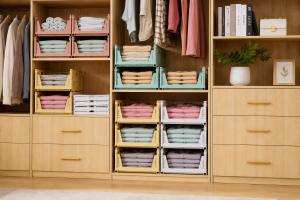
Stackable Storage Baskets
Best for: Using vertical space
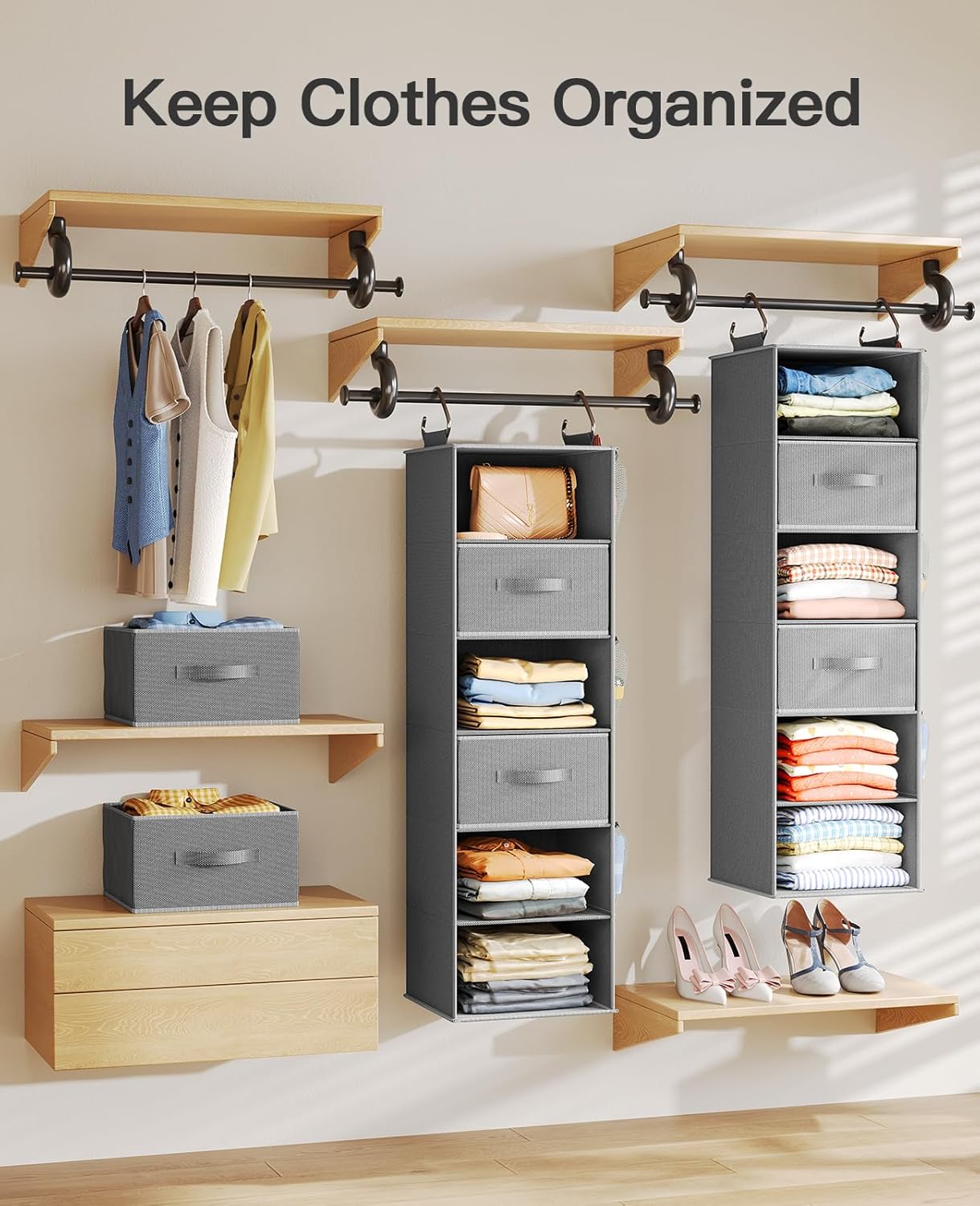
6-Shelf Hanging Organizer
Best for: Turning hanging space into shelves
1. Start by Separating Everyday and Occasional Clothes
Not every piece of clothing needs the same amount of accessibility.
Start by separating your wardrobe into:
- Clothes you wear regularly
- Seasonal clothing
- Special-occasion clothing
- Clothing you rarely wear
Give your easiest-to-reach storage to everyday clothes.
Items you only use occasionally can move to less convenient areas such as upper shelves or dedicated storage containers.
This immediately reduces competition for your best storage space.
2. Use the Space Under Hanging Clothes
Look underneath your shirts, jackets, and other shorter garments.
There may be a surprisingly large empty area between the bottom of the clothing and the closet floor.
A compact 5-Drawer Fabric Organizer can turn this space into storage for:
- Socks
- Underwear
- T-shirts
- Shorts
- Workout clothes
- Accessories
It's essentially a small dresser occupying space that might otherwise go unused.
3. Store Upward Instead of Outward
When floor space is limited, vertical space becomes extremely valuable.
Instead of putting several storage containers beside one another, Stackable Storage Baskets let you create multiple storage levels within roughly the same footprint.
For example:
Top basket: Accessories
Middle basket: Workout clothes
Bottom basket: Seasonal items
This approach can work especially well in closet corners and beneath shelving.
For more ways to maximize vertical space, see How to Make More Room in a Small Closet: 10 Easy Ways.
4. Turn Part of Your Clothing Rod Into Shelves
Sometimes you have enough hanging space but not enough shelving.
A 6-Shelf Hanging Organizer can change that without installing permanent shelves.
It hangs from the existing closet rod and creates compartments for folded clothing.
Use it for:
- Sweaters
- Jeans
- T-shirts
- Leggings
- Accessories
This can be especially helpful in closets that have little more than a rod and a single shelf.
5. Rotate Clothes With the Seasons
Your closet doesn't necessarily need to hold your entire wardrobe year-round.
Heavy coats and thick sweaters take up considerable space. During warmer months, moving those items into storage can free up room for the clothes you're actually wearing.
When the season changes, rotate them back.
If you're storing clothing for several months, see our Best Long-Term Clothing Storage Solutions to Protect Your Wardrobe guide.
6. Make Better Use of Upper Shelves
The highest shelf in a closet is often poorly utilized because it's inconvenient to reach.
That's exactly why it can be useful for things you don't need every day.
Consider storing:
- Seasonal clothing
- Special-occasion clothing
- Extra linens
- Handbags
- Labeled storage bins
Keep frequently used clothing lower and easier to access.
7. Don't Let the Closet Floor Become a Dumping Ground
Small closets often lose valuable storage space because the floor becomes a collection of random belongings.
Shoes pile up.
Bags get tossed into corners.
Boxes appear.
Instead, divide the floor into specific zones.
For example:
Left: shoes
Center: drawer organizer
Right: storage baskets
Once every section has a purpose, maintaining the space becomes much easier.
8. Fold Bulky Clothing Strategically
Some clothing takes up unnecessary hanging space.
Sweaters are a good example.
Many sweaters can be folded rather than hung, freeing up valuable room along the clothing rod while also helping avoid hanger-related stretching.
Folded items can then go into:
- Drawers
- Hanging organizers
- Shelf sections
- Storage baskets
Use the hanging rod primarily for garments that actually benefit from hanging.
9. Use Storage Containers for Clothes You Rarely Need
If something gets worn twice a year, it probably doesn't need prime closet space.
Storage containers can help move infrequently used clothing out of your everyday organization system.
Just keep categories clear.
Instead of one container labeled:
CLOTHES
use labels such as:
WINTER SWEATERS
FORMAL CLOTHING
SUMMER CLOTHES
BABY CLOTHES
You'll know exactly where to look later.
10. Leave Some Empty Space
This might sound strange in an article about maximizing storage.
But don't aim for 100% capacity.
A closet that's completely packed becomes difficult to use.
You need enough room to:
- Move hangers
- Remove clothing
- Return clothing
- Access containers
- Add new items
Sometimes creating breathing room makes a closet feel larger than squeezing another organizer inside.
Where Can You Store Clothes When You Don't Have Enough Closet Space?
Your closet isn't necessarily your only option.
Depending on your home, additional clothing storage might include:
- Under-bed storage
- Freestanding drawers
- Wardrobes
- Storage benches
- Upper shelving
- Appropriate storage containers
- Another dry indoor storage area
The best option depends on how frequently you need the clothing.
Everyday clothes should remain accessible.
Long-term and seasonal clothing can usually occupy less convenient storage areas.
How Do You Organize Lots of Clothes in a Small Space?
Don't start by trying to fit everything.
Start by deciding what needs to be accessible.
Keep your everyday wardrobe in your primary storage area and move seasonal or rarely used pieces elsewhere.
Then maximize the space you have vertically.
A combination of hanging storage, drawers, shelving, and stackable containers is generally more effective than relying on one storage method for everything.
Frequently Asked Questions
How do I store clothes with very little space?
Prioritize everyday clothing, rotate seasonal items, use vertical space, add storage underneath hanging clothes, and move infrequently used garments into secondary storage.
What is the most space-efficient way to store clothes?
There's no single method for every garment. Combining hanging space, folded storage, drawers, shelves, and seasonal storage usually makes better use of limited space.
Is it better to fold or hang clothes to save space?
It depends on the garment and your available storage. Folding many casual clothes can preserve hanging space for garments that are better kept on hangers.
Where can I put clothes if my closet is full?
Consider under-bed storage, compact drawers, freestanding organizers, upper shelving, or dedicated storage containers for seasonal clothing.
How do you store clothes in a small apartment?
Focus on multipurpose and vertical storage. Keep everyday clothing accessible while moving seasonal and rarely worn garments into less prominent storage areas.
Related Guides
Small Closet Organization Ideas That Actually Work
How to Make More Room in a Small Closet: 10 Easy Ways
How to Organize a Closet Without Built-In Storage
Closet Storage Ideas Without Shelves
Renter-Friendly Closet Storage Ideas
Best Long-Term Clothing Storage Solutions to Protect Your Wardrobe
Final Thoughts
Limited space doesn't mean you have to live with an overflowing wardrobe.
Start by deciding which clothes actually need everyday access. Then use overlooked areas such as vertical closet space, the area beneath hanging clothes, upper shelves, and secondary storage for everything else.
You don't need to fit more things into every square inch.
You need to make better use of the space you already have.
Affiliate Disclosure
As an Amazon Associate, I earn from qualifying purchases. If you purchase through one of our links, we may earn a commission at no additional cost to you.